
Summer RVing is hard to beat with open roads, stunning scenery, and campgrounds at their most vibrant. But step inside an RV that’s been sitting in the afternoon sun, and you’ll quickly understand why heat management is one of the most talked-about topics among full-timers and weekend warriors alike. Knowing how to keep your RV cool isn’t just about comfort; it’s about protecting your rig, your food, your electronics, and your sanity when temperatures climb into the triple digits. The good news is that a combination of smart habits and the right tools can make a significant difference, even on the hottest days.
Why It’s Harder to Keep Your RV Cool Than You Might Think
RVs heat up fast. Unlike a house with insulated walls and mature shade trees, most RVs are essentially metal and fiberglass boxes sitting in direct sunlight. Interior temperatures can climb 20 to 30 degrees above the outside air within an hour, and once that heat is trapped, it takes real effort to bring it back down. The roof is the single biggest heat collector, absorbing solar energy and transferring it directly into the living space. Windshields and large windows are the second major culprit, allowing radiant heat to pour in and build up throughout the day. Cooking, showering, and running appliances inside all add to the load, too.
Shade and Site Selection Are Your First Defense
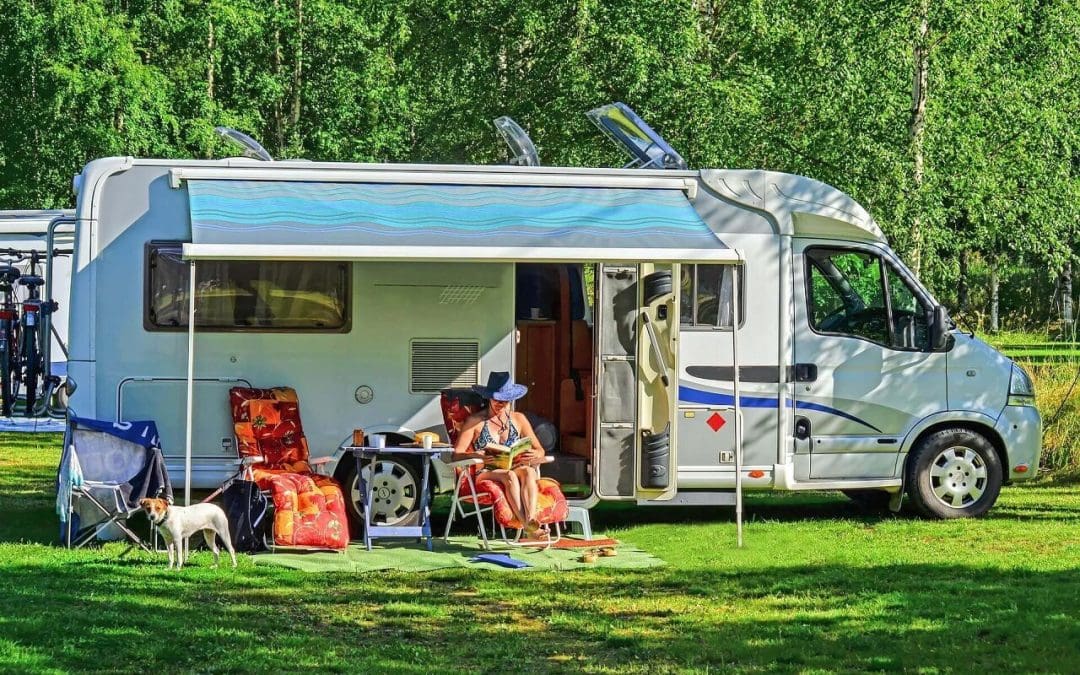
The most powerful tool to keep your RV cool doesn’t cost a cent; it’s simply where you park. A site with meaningful afternoon shade, particularly on the western side of the rig, can reduce interior temperatures by 10 to 15 degrees compared to a fully exposed site. East-facing sites get morning sun and afternoon shade, the ideal orientation for summer camping. When natural shade isn’t available, a quality awning extended to block the afternoon sun makes a real difference. Portable shade structures provide additional coverage for windows and slideouts the awning doesn’t reach. If you have flexibility in your site choice, always prioritize shade over amenities in hot weather.
Block Heat Before It Gets In
Once you’ve chosen the best possible site, the next priority is stopping heat from entering through windows and the windshield. Reflective window covers are one of the most effective and affordable tools to keep your RV cool, reflecting solar radiation before it can pass through the glass. Thermal curtains or cellular shades on interior windows add another layer of insulation. Keeping them closed on the sun-facing side during peak afternoon hours makes a noticeable difference, covering windows is one of the simplest changes with the most immediate payoff.
Smart Ventilation Goes a Long Way
Your roof vents are one of the most valuable features on the rig when it comes to keeping things cool, and they’re often underused. Hot air rises, opening roof vents creates a natural convection current that pulls hot air out. Vent fans take this further, actively exhausting hot air and drawing cooler air in from lower openings. Running roof vent fans in exhaust mode during the hottest part of the day, then switching to intake mode in the evening to pull in cooler night air, reduces how hard your air conditioner has to work. Fans with thermostats automate this entirely. Cooking outside is another easy win; every meal prepared inside adds heat and humidity that makes the whole rig less comfortable.
Keep Your RV Cool With the Right AC Strategy
Air conditioning is the obvious answer for extreme heat, but running it constantly is expensive, hard on the unit, and often impractical off-grid. A smarter approach uses the AC strategically rather than continuously. Pre-cooling the rig before the hottest part of the day gets the interior to a comfortable baseline. From there, shade, reflective covers, and vent fans can maintain that temperature without full-blast AC all afternoon. Keeping filters clean and the rooftop unit clear of debris ensures maximum efficiency when you do run it.
Frequently Asked Questions (FAQs)
What is the most effective way to keep your RV cool without running the AC?
A combination of shade parking, reflective window and windshield covers, and actively running roof vent fans is the most effective non-AC approach. Pre-cooling in the morning, cooking outdoors, and ventilating at night when outside air is cooler can keep interior temperatures remarkably manageable even on hot days.
How much shade do I actually need to keep my RV cool?
Even partial shade makes a significant difference. Shaded rigs typically run 10 to 20 degrees cooler than identical rigs in full sun. Full shade on all sides is ideal, but prioritizing the roof and the afternoon sun side gives you most of the benefit.
Do RV roof coatings actually help keep the interior cool?
Yes. A white or reflective roof coating significantly reduces solar energy absorbed through the roof. Many RVers report interior temperature reductions of 5 to 10 degrees after applying a quality coating, making it one of the better long-term investments for summer camping.
How do I keep my RV cool when camping off-grid without shore power?
Off-grid cooling relies on passive strategies: shade, reflective covers, roof vents, and timing activities for cooler parts of the day. A 12-volt fan system draws minimal power from your battery bank and can run for extended periods. Evaporative coolers work well in low-humidity environments as an additional option.
Is it safe to leave pets in an RV in the summer heat?
Only if the AC is running reliably and you’re confident it won’t shut off unexpectedly. RV interiors can become dangerously hot within minutes if cooling fails. A temperature-monitoring alarm that alerts your phone if interior temperatures exceed a safe threshold is a worthwhile investment for any RVer traveling with pets.
Blue Ribbon RV Inspection offers RV inspections throughout Arizona. Contact us to schedule an appointment today.